
Shipwreck discovery in Ōkārito lagoon
Ōkārito local Graham Sinclair has uncovered a shipwreck, leading to a new recorded archaeological site
Shifting sands reveal shipwreck
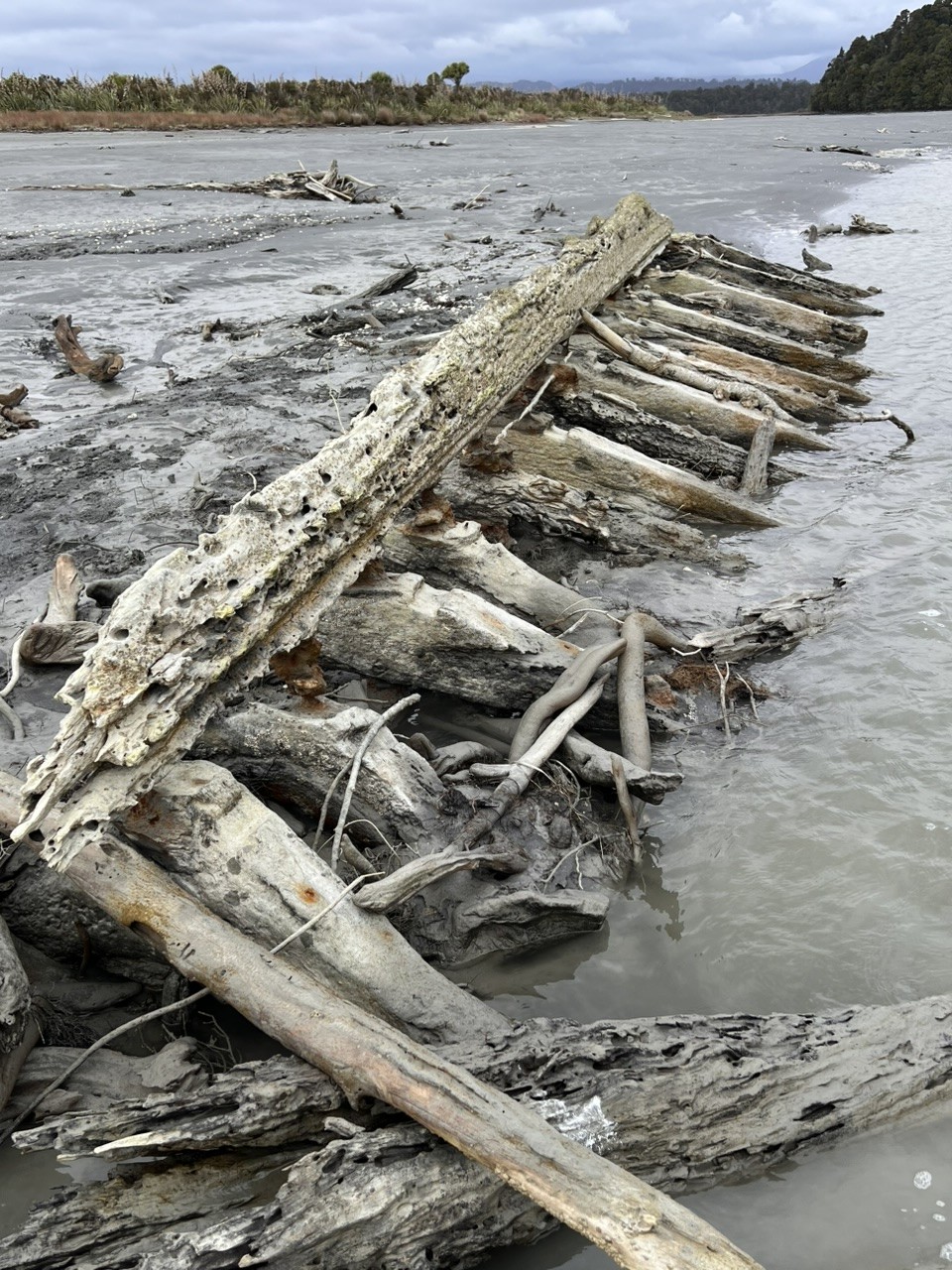
A few weeks ago, Sophia Greene, the Tohu Whenua regional coordinator for Te Tai Poutini West Coast, received an intriguing email from Ōkārito local, Graham Sinclair. The keel and ribs of a 12-metre shipwreck had recently been revealed by shifting sands in the Ōkārito lagoon, visible only at the low tide on a half-moon. Graham said, ‘I have been here at Ōkārito for a few decades, and asking around some other old timers, no one knew of it previously. But the currents have opened a new channel through a sandbank and there it is!’ Hokitika Museum advised that this could be any of a number of recorded shipwrecks from the 1860s-1890s.
Working together to record the site
Sophia was able to connect Graham with Heritage New Zealand Pouhere Taonga archaeologists. Dr Kurt Bennett, who is a specialist marine archaeologist, was excited at this fantastic find. He worked with Graham who helpfully recorded the GPS location and measurements. Based on Graham’s information, Kurt was able to create a new site record in ArchSite (H34/18) for the shipwreck.
Recognising and protecting the shipwreck
While the ship remains unidentified, it likely dates to the 19th century. Based on historical ship losses in the Ōkārito area, possible candidates suggested by the Hokitika Museum include the 'Travellers Bride' and 'Kate' (1866), 'Sisters' and 'Matilda' (1867), 'Rambler' (1869), and 'Waipara' (1898).
Heritage New Zealand senior archaeologist Nigel Bruer says, ‘It is illegal to modify or damage a ship that was wrecked prior to 1900. Recording this new find as an archaeological site formally recognises the wreck and helps the community to better understand and protect the site.’
Sophia enjoyed her part in the process. ‘This was a great outcome with lots of happy people and good connections made. And now another interesting historical dimension has been added to the wonderful visitor experience at Ōkārito.’


