
Brunner Mine’s iconic bridge
The Brunner Bridge has linked coalfields on either side of the Grey River since the 1870s - discover its colourful past.
Brunner Bridge built to link coal mines to the railroad
Opened in 1864, Brunner Mine on the north bank of the Grey River was one of the country’s earliest coal mines. For the first 12 years its high quality coal was barged 13 km downriver to the port of Greymouth on Te Tai Poutini the West Coast.
When other mines opened up nearby - making Brunner coalfield the largest producer in Aotearoa New Zealand - it became obvious that a more efficient transport solution was needed. A railway linking the Grey River mines with the port was built on the south bank of the river, requiring a bridge across the water to link Brunner Mine with the railway.
Engineers and geologists proposed ‘a light inexpensive suspension and truss bridge for small coal mine wagons and foot and horse traffic’. The bridge had to span 90 m across the Grey River, be high enough to clear flood waters and withstand the notorious side wind that funnelled down the valley, aptly called ‘The Barber’.
Almost completed Brunner Bridge collapses in 1876
At 4am on 28 July 1876 the almost completed Brunner Bridge collapsed with a resounding crash. Luckily no one was injured. The southeast cable anchor had failed, partly due to the size and design of the anchor plate, and partly due to the anchor plate not being properly set with concrete. This was due to an apparent miscommunication between the two engineers on the job. It took eight months for the 20 bridge workers to rebuild the structure. Meanwhile coal from the Brunner Mine was bright across to the newly opened railway via a wire rope and cage.
Brunner Bridge mark 2
The failure of the first bridge provided an opportunity to widen the carriageway and re-design the anchor plates. On 11 April 1877 the bridge was officially opened for horse-drawn coal and goods wagons and pedestrian traffic. Horses hauled the ten-ton coal wagons across the bridge decking which sloped slightly to help get the coal more easily to the railway marshalling yards.

Mayhem and congestion on the Brunner Bridge
As the coal output and population grew so too did the congestion and conflicts as pedestrians, goods carts and coal wagons all competed for bridge space. Just 8 months after its opening, the Railways Department introduced a goods toll to reduce interruption to industrial traffic. Residents reacted strongly stating, ‘it is a very disagreeable and obnoxious tax imposed upon us’. The busy bridge saw local kids dodging the coal wagons just to get to school. In 1883 special by-laws were passed preventing pedestrians from using the bridge at the same time as coal trucks. If caught, they faced a £10 fine which was always overturned by the local magistrate! For years locals petitioned the government for a footbridge to be built on top of the bridge and this was finally achieved in 1885.
By 1892 one full coal truck crossed the bridge every 5 minutes, not to mention those carrying coke and bricks. Another railway bridge was mooted as the coal outputs peaked but it was never built. Safety concerns increased, along with the number of by-laws, until the bridge became known as the most regulated bridge in Aotearoa New Zealand.
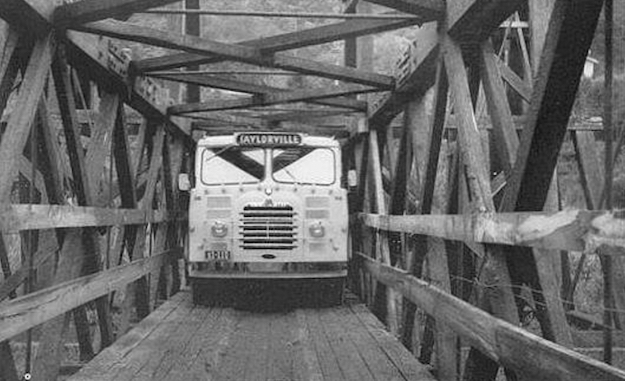
The Brunner Bridge after 1900
Brunner Bridge was refurbished several times in the 1900s and finally closed to vehicles after the opening of the Stillwater Bridge in 1978. It remained open as a footbridge to link both sides of what is now Brunner Mine Historic Area. The bridge was restored in 2003-4 and remains an important physical and historical link to Aotearoa New Zealand’s most important coal mining sites.


