Tohu Whenua sites provide insight into early Northland schooling methods
Kerikeri Mission Station (Kororipo Heritage Park) and Te Waimate Mission Station were able to provide helpful information to Kaitaia Primary School about how the first Northland schools educated their students.
Kaitaia Primary school celebrated its 150th anniversary in April 2025, but had limited information about their school's earliest educational activities. To gain insights, the school turned to Tohu Whenua sites Kerikeri Mission Station (Kororipo Heritage Park) and Te Waimate Mission Station for more details.
With educational roots predating its official beginnings in 1875, Kerikeri Mission Station Property Lead Liz Bigwood shares, “we can be fairly confident that the mission school at Kaitaia would have employed the same methodologies as the mission schools in the Bay of Islands.”
Mission schools still 'got some things right'
Both cared for by Heritage New Zealand Pouhere Taonga, Kerikeri Mission Station and Te Waimate Mission operated schools with some curriculum content that may sound a bit dated to our way of thinking – ‘domestic arts’ for the girls for example. However, Liz thinks that the missionaries – whether through good judgement or sheer good luck – got some things right.
“Lessons were taught in te reo Māori, and the missionary teacher’s method of ‘Mutual Instruction’ – where senior or more accomplished pupils taught juniors – proved extremely successful, probably because it mirrored whānau-based tikanga where older children cared for and instructed their younger siblings,” says Liz.
Mission schools were turning out students who were increasingly standing with dignity in both the Māori and European worlds – and who were influencing both.
Eruera Pare Hongi: a star pupil at Te Waimate Mission
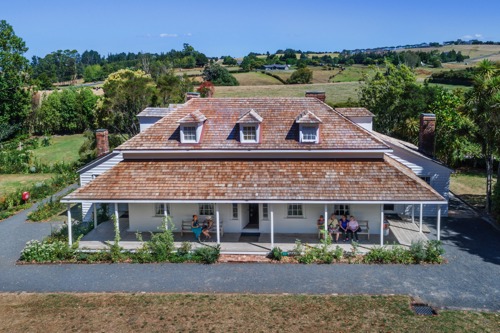
Missionary teacher George Clarke, whose 1832 residence is the remaining building at Te Waimate Mission, described his top scholars as ‘...masters of reading and writing’. One such star pupil was Eruera Pare Hongi who attended school at the Kerikeri mission. At the age of 10 Eruera had written a letter to the leaders of the Church Missionary Society in London – under Clarke’s guidance – asking for writing paper and an invitation to visit England.
“Eruera Hongi, a relative of Hongi Hika, went on to become the most prominent Māori scribe of the 1830s before his young life was cut short by tuberculosis in 1836,” says Liz.
“He wrote the Māori text for the letter sent by 13 Ngāpuhi rangatira to King William IV in 1831 where, among other things, they asked the King to send laws to govern his British subjects in New Zealand. He was also the scribe for the Māori text of He Whakaputanga, the 1835 Declaration of Independence.”

Rongo Hongi and the Kerikeri Mission school
Another missionary protege was Rongo Hongi, the daughter of Hongi Hika. Living with the Kemp family at the Kerikeri Mission station provided Rongo with some of the abilities needed to navigate the very different worlds of Māori and Pakeha. Rongo would later excercise her independent voice and her mana writing letters to Governor Grey and other leaders. Unlike Pakeha women of the time, Rongo was independent of her husband Hone Heke, though she worked with him towards achieving shared objectives.
“Rongo has left a legacy of her earliest reading and writing abilities – a writing slate recording the words ‘Na Rongo Hongi 16’ which was found under the pantry floorboards of Kemp House in the year 2000,” says Liz.
“Rongo’s slate has since been recognised by UNESCO for its importance in helping tell the stories of early Māori literacy by being accepted onto the Aotearoa New Zealand Memory of the World Register.”
Throughout seismic social, economic and cultural changes, schools at Kerikeri Mission, Te Waimate and Kaitaia been a constant educational presence - bringing learning of one kind or another to the community for nearly two centuries.


